
About
We are landworkers, crofters and artists who have come together to build a vision of local, sustainable processing of our fleeces.
Read our Mission Statement HERE.
Meet the team HERE.
Vision
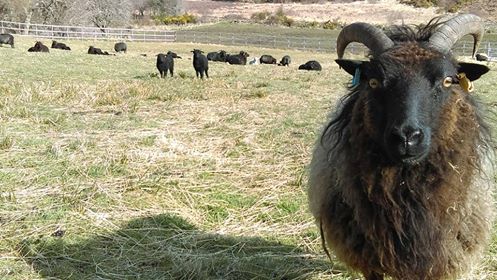
Founded in 2022 and hosted by the owners of the Hirsel farm in a collection of repurposed outbuildings, and supported by other farmers, crofters, and wool businesses, Highland Wool’s mission is to support a sustainable wool industry in Scotland; to process Highlands & Islands wool into useful products; to have a positive environmental impact with our low-impact mill, and to help mitigate farming’s impact on our environment by lowering the amount of wool that goes to waste in the UK; to enable farmers to get more value from their wool crop; to bring together wool producers, crafters and customers in order to add value to the “100% Made in Scotland” label. After a period of research, testing, and learning, we began commercial processing of wool from Highland farms in July 2025.
Our Home
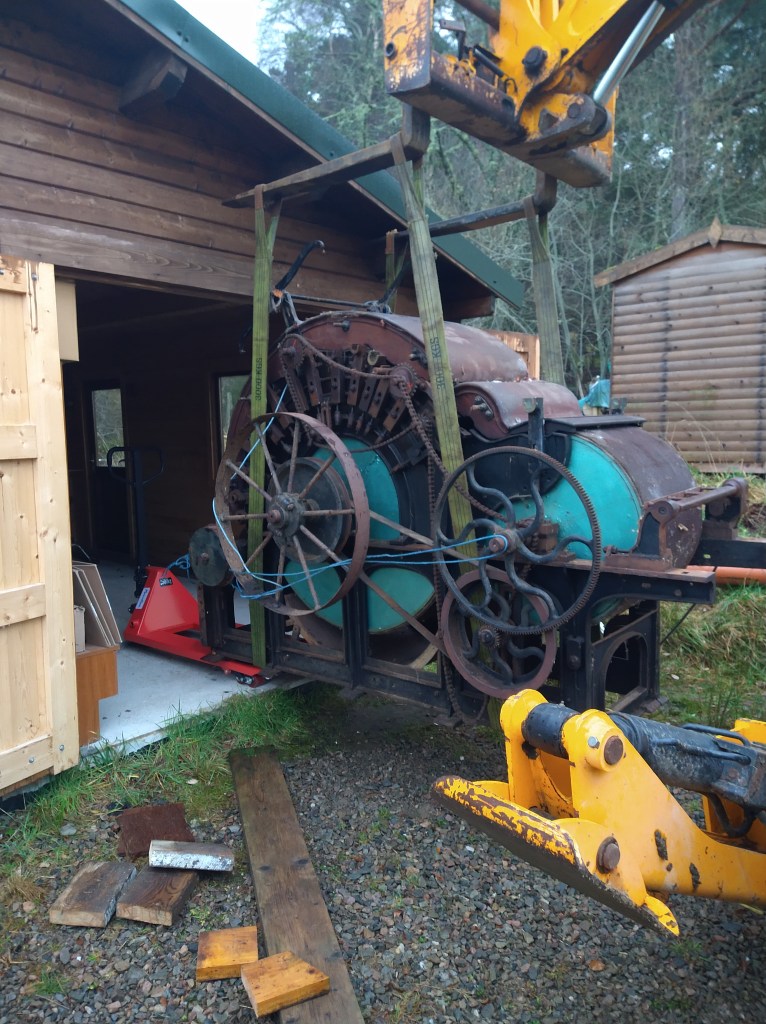
Our long term goal is to house all our operations under one roof at The Hirsel, a small nature friendly farm in Ardgay. We hope to renovate the farm’s 200+year old barn for our future home, or to build a purpose-built space. In the meantime, we’re resident in a collection of repurposed farm outbuildings and portacabins, mostly donated by and shared with the farm, where we work with ‘Caroline’, our rescued Victorian-era carding machine, a second hand Belfast wool picker, and a lot of hands-on, low impact fleece processing. As the farm is on its own water supply – and a hill which gets quite slippy in the wet or icy months – water saving and re-use is crucial, and work is sometimes impacted by weather or other farm realities, but with creative thinking, flexible scheduling, and water recycling, we make it work for Highland Wool and the Hirsel!
Our sustainable, circular approach includes every aspect of the process. These are some of the ways we will meet our goal:
Our approach
- Building a low energy system, which uses human, passive, and low energy processes whenever possible
- Recycling waste water, which comes from our own spring, with a borehole and rainwater catching systems as back up.
- A ‘no waste’ approach, seeking out uses for even the worst fleece, and developing secondary products from ‘waste’.
- Keeping our packaging minimal and recyclable.
- A commitment to paying the Real Living Wage to employees, adopting Fair Trade practices, and whenever possible, ensuring that our contractors do the same.
History of Wool in Scotland
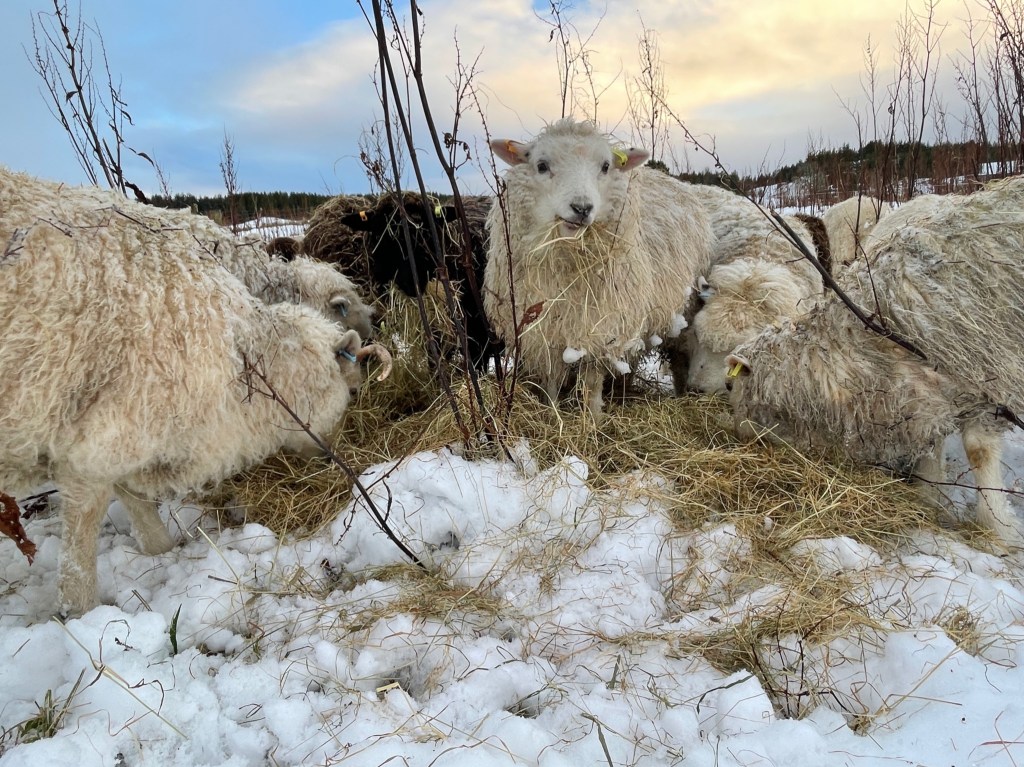
There’s a long history of a cottage wool industry in Scotland, with most rural families sourcing the bulk of their textile needs from their own small flocks of sheep. However, when the so-called ‘improvements’ led to the clearing of many families and their native sheep, in favour of large commercial flocks to supply the industrialized wool industry, home processing in Scotland began to die out – only surviving in small pockets, such as in the island production of tweed.
Most of the industry moved to the Central Belt and further south, until the Highlands were left with no local mills servicing small flocks. Today, farmers must send their fleeces many miles away – often into England or Wales – for sale or processing, while low wool prices mean that shearing and transport costs are now regularly higher than the payments farmers receive for their fleeces. Additionally, this adds ‘carbon miles’ to an otherwise sustainable, carbon storing material. Even worse, it leads to many farms burning or burying their wool harvest, a shocking and heartbreaking choice some feel forced to make.
Recently, small flock keepers across the Highlands have been fighting to bring back the cottage wool industry, and Highland Wool’s goal is to join their efforts, by bringing wool processing home to the Highlands, with an emphasis on provenance, and on the welfare of our land and animals.

